

Conflict Resolution and Anger Management: Why Pausing Matters

By Daniel Tarisayi, Licensed Psychologist
Part 3: Building Stronger Relationships
Anger is a natural human emotion, but how we respond to it can determine whether a disagreement becomes an opportunity for understanding or a conflict that damages relationships. One of the most effective ways to manage anger is surprisingly simple: pause before reacting.
Why Waiting Helps
One of the most powerful anger-management tools is simply taking a brief pause. The emotional part of the brain reacts almost instantly, while the thinking part of the brain takes a little longer to assess the situation.
Research suggests that even a brief pause can give the brain time to regain control, helping a person respond more wisely rather than emotionally. Instead of reacting immediately when upset, it is often better to take a deep breath, count slowly, pray, or step away for a moment. A short pause can prevent many conflicts from becoming major problems.
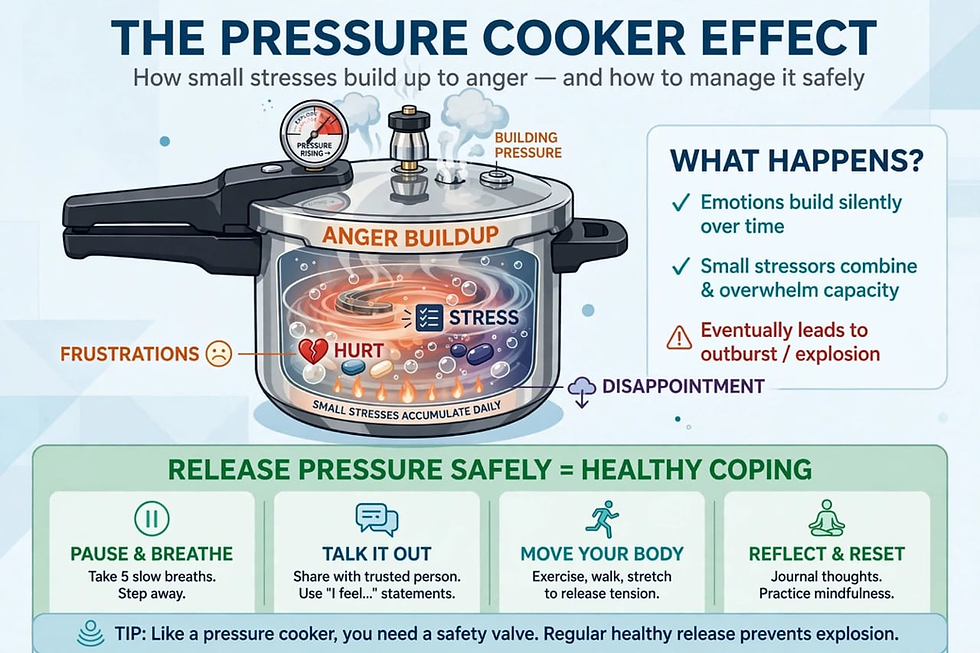
The Pressure Cooker Effect
Unexpressed emotions can build over time like pressure inside a cooker. When frustrations, disappointments, and hurts are ignored, they accumulate until eventually they explode.
Warning signs of emotional pressure include:
- Becoming irritated over minor issues.
- Withdrawing from family, friends, or colleagues.
- Difficulty sleeping.
- Frequent frustration.
- Passive-aggressive behaviour.
- Increased alcohol or substance use.
- Sudden angry outbursts.
Recognizing these warning signs early allows people to seek help before emotions become overwhelming.
Why Small Issues Become Big Problems
Many conflicts grow because people react to assumptions rather than facts. Sometimes individuals feel disrespected, carry unresolved hurts from the past, or become influenced by fear, pride, and insecurity. Unspoken expectations can also create misunderstanding and disappointment.
One of the most important psychological realities is that people are often not angry about what actually happened. Instead, they become angry about the meaning they attach to the situation.
For example, if a spouse forgets an anniversary, one person may see it as a simple mistake, while another may interpret it as a sign that they are not valued. The emotional response is often driven by interpretation rather than the event itself.

anger management and conflict resolution


Comments