

Development Begins When Maintenance Becomes a National Culture

By Simbarashe Namusi
Thursday, July 23, 2026
Every Sunday, teams from GeoPomona Waste Management move through Harare's streets with shovels and disinfectant. They are not collecting rubbish. They are cleaning up human waste, left on open ground, because the public toilets meant to receive it either do not work or do not exist.
The Invisible Crisis of Infrastructure Maintenance in Zimbabwe
This is what happens when maintenance stops being a priority. It does not announce itself as a crisis. It arrives quietly, block by block, until a street becomes a toilet and a private company has to do the work a public facility was built for.
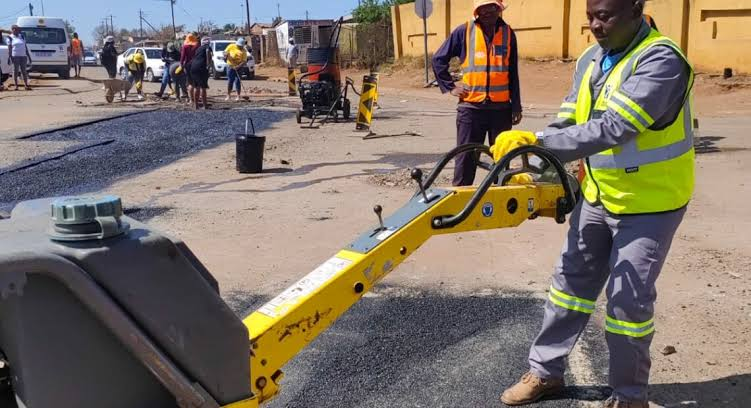
The Bulawayo-Victoria Falls road tells the same story on a larger scale. It is now undergoing refurbishment, at a cost far higher than routine upkeep would ever have demanded, because the road was left to deteriorate until deterioration became the only thing left to talk about. A newly tarred road is one of the most satisfying sights in Zimbabwe. It signals progress, inspires confidence and promises easier journeys. But almost from the day the ribbon is cut, the countdown to its decline begins, and Bulawayo-Vic Falls shows where that countdown ends: not with a repair, but with a reconstruction.
Not because the engineers failed. Not because the road had reached the end of its lifespan. More often, it is because maintenance was never embedded in the culture that followed construction.
The Economic Impact of Neglected Infrastructure in Harare and Bulawayo
Zimbabwe has become remarkably adept at building. New roads, schools, clinics, dams and marketplaces stand as visible symbols of development and national ambition. They deserve to be celebrated. But somewhere between commissioning and daily use, our attention shifts. Maintenance slips down the list of priorities until neglect becomes too obvious and too expensive to ignore. This is one of the quiet contradictions of our development story: we celebrate what we build, but seldom what we preserve.
The evidence is all around us. A classroom block with broken windowpanes that remain unrepaired for years. Streetlights that fail one by one until entire neighbourhoods are left in darkness. Small potholes that become crater-like hazards because no one acted when the repair was simple and affordable. Each tells the same story: neglected maintenance eventually becomes stalled development.
Preventive Maintenance as a National Economic Strategy
Maintenance is often viewed as an engineering function. In reality, it is an economic strategy.
Every dollar spent on preventive maintenance saves many more in future reconstruction. Every public asset that reaches its intended lifespan delivers greater value to taxpayers. Every bridge, water system, clinic or school kept in good condition reduces the need for costly replacement. The countries admired for efficient infrastructure are not necessarily those that build the most; they are the ones that protect what they have already built.
Yet maintenance suffers from a public relations problem. There are no ribbon-cutting ceremonies for repaired drainage systems. Cameras seldom gather when municipal workers repaint road markings, service water pumps, or replace damaged streetlights. Preventive maintenance rarely makes headlines because its greatest achievement is that nothing goes wrong. Perhaps that is precisely why it is so often neglected.
Policy Reforms and Civic Duty: Building a Sustainable Future
Government bears the primary responsibility for safeguarding public infrastructure. Maintenance budgets should be protected rather than treated as discretionary spending whenever resources become constrained. Local authorities should publish maintenance schedules alongside development plans, allowing citizens to judge success not only by new projects but also by the condition of existing ones. But government cannot build a maintenance culture on its own.
Public infrastructure belongs to all of us. Yet too often it is treated as if it belongs to no one. The bus shelters at the Charge Office terminus in Harare are a case in point. Commuters no longer stand under them. The shelters are filled with litter and reek of urine, a facility built to serve the public now avoided by the very public it was meant to serve. Every act of vandalism or neglect like this imposes a hidden tax on society, diverting scarce resources from new investment to unnecessary repairs.
A mature society understands that stewardship is a civic duty. Citizens report faults before they become disasters. Communities protect shared infrastructure. Schools teach respect for public property as part of responsible citizenship. Businesses recognise that well-maintained infrastructure is not merely a public good it is an economic necessity.
Perhaps it is also time to rethink how we measure development. We are quick to count kilometres of newly built roads, classrooms completed and clinics commissioned. Those figures matter. But an equally important question is whether those same roads remain smooth, those classrooms remain functional, and those clinics continue serving communities a decade later. Development is not measured only by what a nation builds. It is measured by what it chooses to sustain.
Zimbabwe's future will not be secured solely by constructing new infrastructure. It will be secured by cultivating a national habit of looking after what already exists. On Sunday morning, the GeoPomona teams will be out again, with their shovels and disinfectant, doing work that a functioning toilet block would have made unnecessary. They will do it again the Sunday after that. The ribbon was cut once. The cleanup never stops.
Simbarashe Namusi is a media expert, peace, leadership, and governance scholar writing in his personal capacity.

Zimbabwe infrastructure maintenance culture


Comments