

OPINION / GOVERNANCE: The Pavement Pharmacy — The Rise of Informal Medicine Trade in Harare


By Simbarashe Namusi
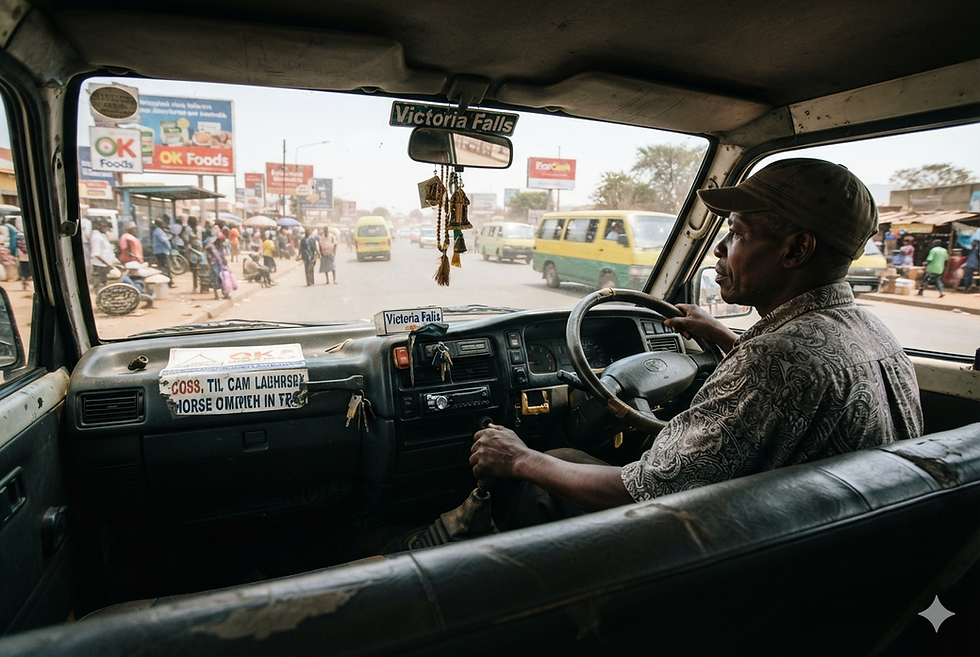
The corner of Robert Mugabe and Julius Nyerere is not supposed to be a bus terminus. The council never licensed it as one. But the kombis stop there anyway, conductors hanging out of sliding doors shouting destinations over each other, and where commuters gather, so does everything they might need.
The Informal Drug Trade at Urban Transport Hubs
Doc works the edge of that crowd, a sports bag slung across his chest, unzipped just enough to show what's inside without announcing it to the wrong person. That's what the touts and regulars call him. Not his real name, just what he sells and how he sells it. He used to assist at a pharmacy in Mbare before it closed. He still knows the names. Amoxicillin. Metformin. Something for the pressure, something for the malaria that never quite clears. He sells to people boarding kombis who don't have time to queue at a real pharmacy, and to people getting off kombis who can't afford one.
He doesn't ask what the tablets are for. He asks how many, and whether they want the small pack or the big one.
This is the arrangement Harare has settled into. Antibiotics, antihypertensives, antidiabetics, antimalarials, sold loose out of sports bags and car boots and folded plastic packets, at the exact spots where the city's illegal transport network concentrates its captive audience. No cold chain. No prescription. No pharmacist asking the one question that actually matters: does this drug interact with what the buyer is already taking.
Regulatory Crackdowns and the Economics of Illegal Medicines
The scale of it surprised even the regulators. In May, police arrested five people at a Showground parking area in Belvedere, recovering unregistered medicines and pharmaceutical supplies worth close to US$2,700. It was one raid among many. Health authorities have flagged a broader surge in prescription drugs moving through unauthorised channels, alongside healthcare being delivered by people with no license to deliver it. Among the medicines recovered in these sweeps: epilepsy drugs, antifungals, painkillers like tramadol, and antibiotics including doxycycline and metronidazole. These are not vitamin supplements. They are drugs that punish incorrect use.
The economics explain the demand better than any morality lecture does. A consultation costs money. A prescription costs more. Doc's sports bag costs neither, and it moves at the speed of the commuter's own schedule: no queue, no waiting room, no appointment. The products on offer range from antibiotics and painkillers to skin-lightening creams and restricted prescription medicines, sold from homes, tuckshops, and market corners without any quality control or professional oversight. Zimbabwe's informal medicine trade didn't appear because people stopped caring about their health. It appeared because the formal system priced too many of them out of caring for it properly.
Public Health Risks: Antimicrobial Resistance and Counterfeit Drugs
The long-term bill is quieter than the short-term convenience, and it's a bill the whole country pays, not just the buyer. An antibiotic course taken incompletely, because the packet ran out, or Doc was out of stock that week, doesn't just fail to cure the infection. It trains the bacteria. Public health experts warn that the unregulated circulation of these drugs accelerates antimicrobial resistance, a trend capable of undermining legitimate treatment across the whole region. The antibiotic that saved your father's life in 2015 may not save yours in 2030, because somewhere along the way, resistance was cultivated one incomplete, unsupervised dose at a time.
Then there's the counterfeit question, which nobody selling from a sports bag can answer honestly because nobody selling from a sports bag actually knows. Africa accounted for 42 percent of the counterfeit and substandard medical products detected worldwide between 2013 and 2017, and the pipeline into corners like this one runs through the same porous borders that move everything else the state can't track. A tablet that looks right, is packaged wrong, dosed wrong, or entirely inert, kills exactly as effectively as no treatment at all. Except the patient believes they've been treated, and delays the point at which they seek real care.
Governance Challenges: Policy Enforcement vs Economic Reality
The regulators know all this. Circulars get issued. Licenses get revoked. Blitzes get announced with the appropriate stern language about the full force of the law. Doc is back at the corner the following week, because enforcement without alternative is just a temporary interruption of an economic necessity, the same way the illegal bus terminus behind him reopens within hours of every council crackdown.
He is there again this morning, actually. Same bag, same corner, same glance up the road before the next sale.
Nobody in this exchange is protected. Not the buyer, guessing at a dose. Not Doc, one raid away from losing what little he has. Not the country, quietly building resistance to the medicine that's supposed to save it.
Editor's note: "Doc" is a composite figure representing a pattern of trade observed at Harare's illegal transport hubs; details are illustrative, not a single-sourced account.
Simbarashe Namusi is a media expert, peace, leadership, and governance scholar writing in his personal capacity.

informal medicine trade Harare


Comments