

Redwing Mine Revival Gains Pace as Namib Minerals Targets US$400 Million Zimbabwe Gold Expansion


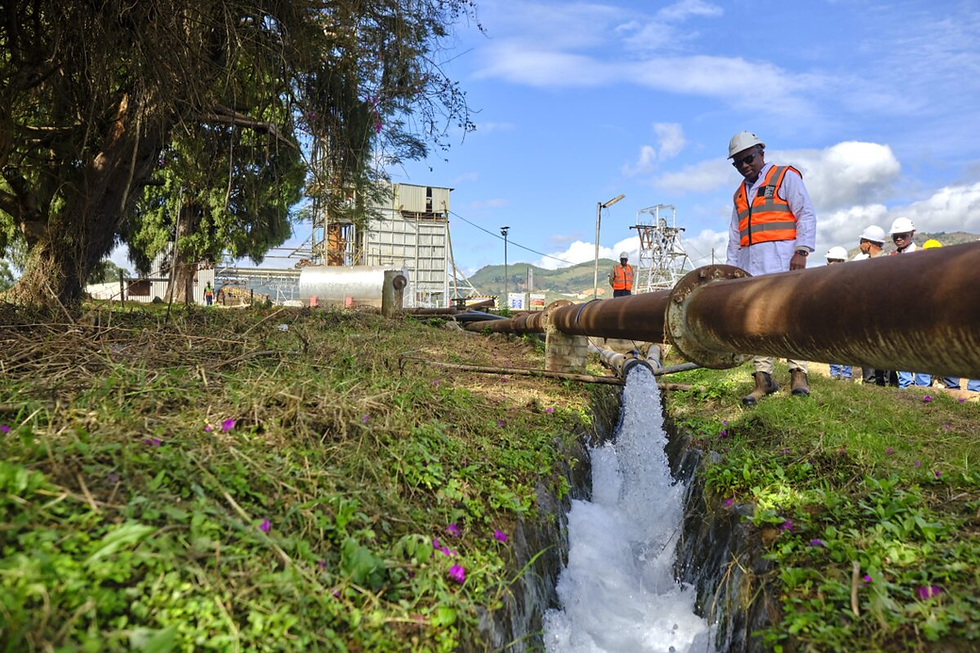
PENHALONGA, MANICALAND — The constant hum of high-capacity pumps echoing through Redwing Mine signals far more than a dewatering operation. It marks the beginning of what could become one of Zimbabwe's most significant mining revival projects and one of the largest gold restart investments currently underway in Southern Africa.
Backed by international investors following its landmark Nasdaq listing, Namib Minerals is accelerating plans to restore production at Redwing Mine in Penhalonga while simultaneously advancing the restart of Mazowe Mine, positioning Zimbabwe at the centre of renewed global interest in African gold assets.
Since January 2026, rehabilitation work at Redwing Mine has gathered pace, with more than 544,000 cubic metres of water pumped from underground workings. The extensive dewatering exercise has lowered water levels by nearly 22 metres, allowing engineers and technical teams to gain access to previously submerged sections of the mine.
At the same time, new electricity infrastructure is being installed, critical equipment is being mobilised to the site, and engineering assessments are progressing ahead of full-scale mining operations. The work represents a major milestone for a mine that had remained under care and maintenance for years.
Namib Minerals' expansion strategy comes at a time when gold prices remain elevated, and investors are increasingly seeking exposure to stable, high-potential gold assets. The company attracted international attention in 2025 when it completed a historic listing on the Nasdaq Stock Market through what was widely reported as the largest Special Purpose Acquisition Company (SPAC) transaction involving an African mining business.
The listing opened access to major pools of institutional capital in the United States and other international markets, strengthening Namib's ability to fund growth projects across Zimbabwe.
Its local portfolio includes the producing How Mine, alongside the redevelopment of Redwing and Mazowe mines.
According to Namib Minerals Chief Executive Officer Tulani Sikwila, the success of How Mine demonstrates the company's ability to operate large-scale mining assets efficiently and profitably.
"How Mine remains a very strong asset, and we are proud that the operation is a symbol of our track record in delivering value, whether to shareholders, government, or communities," Sikwila said.
Having assumed the CEO role in March 2026, Sikwila brings extensive institutional knowledge to the position after spending nearly two decades within the group in finance, operational, and leadership roles.
"I've been part of this business for two decades across various leadership positions. I know these assets. I'm tuned in to the operating environment. I know the communities around our operations," he said.
The company plans to invest between US$300 million and US$400 million into restarting and expanding operations at Redwing and Mazowe. Industry analysts note that brownfield projects such as Redwing and Mazowe offer significant advantages because they already possess established infrastructure, historical workings, access roads, and geological data, reducing development costs compared to greenfield mining projects.
"We want to build a capital-efficient African mining platform, one that creates real value for investors, employees and the communities we operate in," Sikwila said.
"The success of How Mine shows our capacity as a business. But the real opportunity is in unlocking the full potential of our asset base."

The restart programme is also expected to deliver substantial employment benefits. Some former workers have already returned as rehabilitation activities intensify. Direct employment across Namib's Zimbabwe operations is projected to rise from approximately 1,375 employees to around 3,100 workers once Redwing and Mazowe reach full production.
Additional indirect jobs are expected to be created through local procurement, contracting opportunities, and supplier development programmes.
To support the expansion programme, Namib has strengthened its technical leadership team through the appointment of Antonio Nieto as Vice President for Technical Services. Nieto brings more than 25 years of international mining experience to the company. Meanwhile, global engineering consultancy WSP Global has been engaged to undertake definitive feasibility studies across the group's mining portfolio, including Redwing.
Beyond mining operations, Namib says it intends to replicate community development initiatives already established at How Mine. The company has begun upgrading healthcare infrastructure around Redwing, including improvements to the mine clinic, which provides free primary healthcare services to local residents. A new ambulance has also been acquired, while mine transport resources are expected to assist local schools.
"At Redwing, we are upgrading the mine clinic, which provides free basic healthcare to the surrounding community. A new ambulance has been acquired to serve the community, and the mine bus will be available for local school children," Sikwila said.
With rehabilitation work progressing, technical studies underway, and financing efforts advancing simultaneously, Redwing Mine's revival is emerging as one of Zimbabwe's most closely watched mining developments. For a country seeking to increase mineral production, attract foreign investment, and create employment, the success of Redwing and Mazowe could become a significant indicator of confidence in Zimbabwe's mining sector.
"What I want people to understand is that this is not just a plan on paper," Sikwila said. "It is already in motion."
Redwing Mine restart


Comments