

Zimbabwe Expands Irrigation with Major Dam Projects to Combat Climate Change and Food Insecurity

Reporter
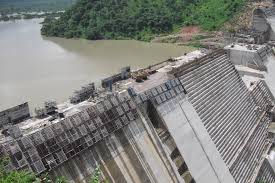
In a bold move to secure the nation’s food future, Government is making significant strides in enhancing food security through the construction of major dams designed to improve irrigation across the country. These initiatives reflect a steadfast commitment to expanding irrigation development, with six completed dams now capable of irrigating a total of 56,650 hectares. Among these, the Tugwi Mukosi Dam in Masvingo stands out, with the potential to irrigate 40,000ha in Chivi and Chiredzi. Other key projects include the Marovanyati Dam in Manicaland, expected to irrigate 1,250ha in Buhera, and the Muchekeranwa Dam in Mashonaland East, which can cover 1,400ha in Makoni and Marondera. Additionally, the Mutirikwi Dam in Masvingo has a capacity of 3,000ha, while the Biri Dam in Mashonaland West can irrigate 4,000ha. The Lilstock Dam in Mashonaland Central is set to benefit 7,000ha across Bindura, Mazowe, and Mt Darwin. Government is also actively investing in ongoing projects, with dams under construction expected to irrigate an additional 38,953ha. Notable among these are the Semwa Dam in Mashonaland Central, projected to irrigate 12,000ha in Rushinga, and the Gwayi Shangani Dam in Matabeleland North, anticipating 10,000ha of irrigation in Hwange. Lands, Agriculture, Water, Fisheries and Rural Development deputy minister Vangelis Haritatos emphasised the urgent need for climate-smart irrigation to counter the impacts of climate change.
“Climate change is with us and damaging our country. The start is to ensure that we move away from rain-fed agriculture to climate-smart irrigation development. This is our ministry’s primary concern right now for the next two to three years,” he said. Acknowledging the challenges posed by an El Niño-induced drought that affected grain production, Cde Haritatos noted that approximately 230,000ha are currently under irrigation, which is less than the targeted 500,000ha. Government recognises the necessity of expanding irrigation capacity, aiming to develop an additional 270,000ha for agricultural use, primarily focusing on cereal crops to bolster food self-sufficiency. “Out of the 500,000ha that we are targeting, 350,000ha must be for cereal crops,” he projected, anticipating a yield of approximately two million tonnes of cereal.
In addition to enhancing irrigation infrastructure, the Government is taking proactive measures to climate-proof agriculture through extensive dam construction. This initiative is crucial for building community resilience against climate shocks, particularly droughts. The establishment of Village Business Units is a pivotal aspect of this strategy, designed to serve all 35,000 villages across Zimbabwe. These units will revolve around solar-powered boreholes and drip-irrigated plots, benefiting about 50 households in each village.
Plans for aggregation, value addition, and beneficiation are also in place to stimulate rural industrialisation and catalyse development. Dr Anxious Masuka reinforced Government’s commitment to improving food security. “Zimbabwe is projected to become drier in the decades ahead. The measures taken to climate-proof agriculture must, therefore, be consolidated and accelerated.” He highlighted the significance of sustainable agricultural models, referencing Zimbabwe’s success in conservation agriculture and its mechanisation efforts that have garnered attention beyond the region. Through these concerted efforts, Government is laying a solid agricultural foundation to support accelerated rural industrialisation and development, addressing both current needs and future challenges posed by climate change.



Comments