

Zimbabwe launches new child protection plan to tackle online abuse, child marriage

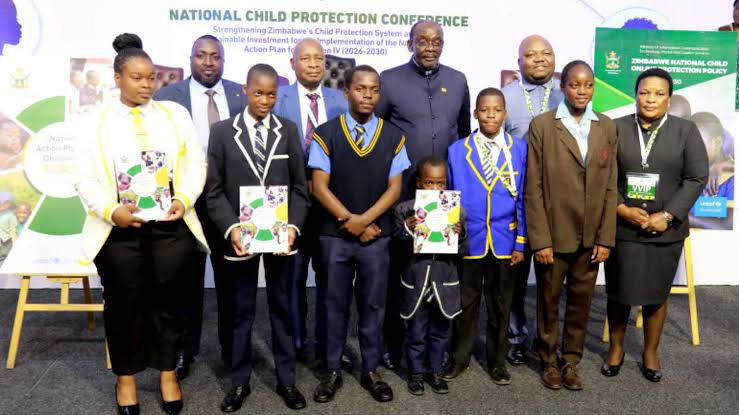
BULAWAYO – Vice President Kembo Mohadi has reaffirmed the Government's commitment to protecting Zimbabwe's children through stronger education, social protection and child welfare systems following the launch of the National Action Plan for Children IV (2026–2030) and the National Child Online Protection Policy.
Speaking at the launch in Bulawayo on Thursday, Mohadi said the two frameworks were designed to address emerging threats facing children, particularly in the digital age, while strengthening Zimbabwe's child protection systems.
"I am confident that the National Action Plan for Children IV (2026–2030) and the National Child Online Protection Policy will serve as a comprehensive and adaptive framework for our efforts to respond to the evolving needs of our children," he said.
The Vice President said the new strategy expands previous child protection programmes by incorporating issues such as online child protection, cyber violence, consent, online exploitation and the growing links between child labour and digital abuse.
Mohadi said the Second Republic remains committed to ending child marriage, child labour, adolescent pregnancies and violence against children through coordinated interventions involving Government, communities and development partners.
"We should remove our children from the streets, get our children out of the mines and ensure that our classrooms are filled. However, policy on its own cannot overcome deep-rooted cultural challenges," he said.

He said Government's "Not in My Village" campaign, implemented with traditional leaders, was gaining momentum in efforts to eliminate child marriage and keep children in school. Mohadi added that the child protection policies align with the National Development Strategy 2 (NDS2) and Zimbabwe's Vision 2030, which prioritise human capital development and inclusive social protection.
The Vice President said Zimbabwe had made significant progress in education, with more than 90% of school-age children now enrolled. He credited programmes promoting girls' education with reducing school dropout rates among adolescent girls, particularly in vulnerable communities. Mohadi also pledged continued support for children living with disabilities through expanded inclusive education, specialised learning materials, trained teachers and improved access to social protection programmes.
"Every child in our nation matters equally and children with disabilities deserve equal treatment and enjoyment of their inalienable rights," he said.
He said Government would continue investing in disability grants, cash transfer programmes, community-based rehabilitation services, assistive technologies and accessible public infrastructure.
Mohadi called on Government institutions, civil society organisations, traditional and religious leaders, development partners and communities to work together to combat violence, exploitation and discrimination against children.
"The National Action Plan for Children provides a concrete roadmap, resources and accountability mechanisms necessary to translate our political commitment into tangible protection for every child," he said.
He said Government would publish regular progress reports and set measurable implementation targets to ensure accountability.
Speaking at the same event, Bulawayo Minister of State for Provincial Affairs and Devolution Judith Ncube said children continue to face increasingly complex risks, including abuse, trafficking, cybercrime, harmful cultural practices and vulnerabilities associated with migration.
She said coordinated action was essential to strengthen Zimbabwe's child protection system and safeguard children's rights in an evolving social and digital environment.
Zimbabwe National Action Plan for Children 2026–2030


Comments