

700 New Buses to Flood Zimbabwe’s Urban Centres as ZPTO and Government Move to Crush Touting Cartels


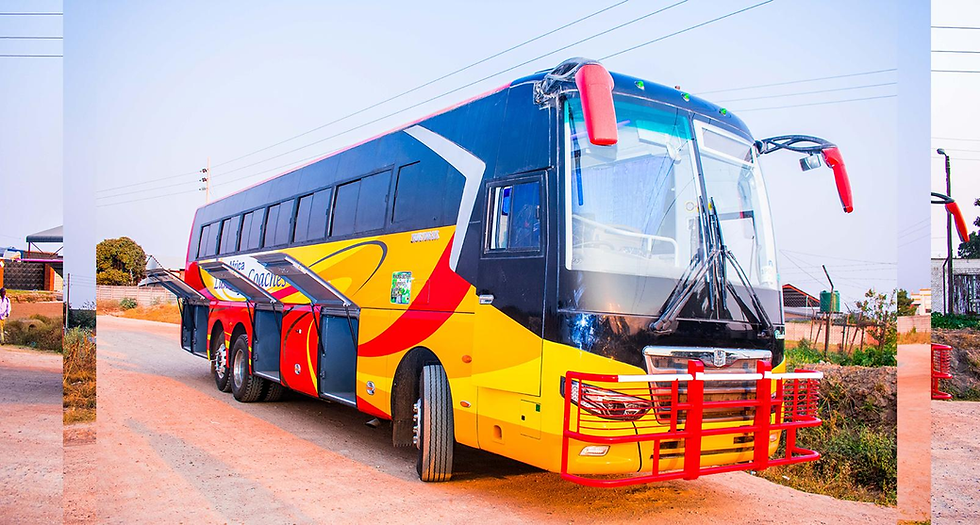
HARARE – A massive private sector-led intervention is set to completely overhaul Zimbabwe's chaotic urban transport landscape, with 200 public service buses already en route from China and an additional 500 currently under production.
The major fleet expansion, confirmed by the Zimbabwe Passenger Transport Organisation (ZPTO) following a high-level stakeholders' meeting in Harare, marks a coordinated attempt by transporters, municipal authorities, and the central government to restore sanity, eliminate illegal ranks, and permanently dismantle the violent touting cartels (mahwindi) that dominate urban commuter ranks.
For years, the failure of mass transit has left a vacuum filled by informal, unregulated operators and aggressive touting networks. In high-density ranks, these cartels systematically extort cross-border and local operators, aggressively hiking passenger fares while tax-evading on their illicit earnings.
ZPTO Chairman Dr. Samson Nhanhanga revealed that the new fleet will operate under a centralized route management framework with uniform branding a structural shift designed to make touts completely obsolete.
"Currently, we are struggling with touts who charge us 10 percent and do not pay tax because there is no order," Dr. Nhanhanga stated. "You will find two buses going the same route loading at the same time. But if we begin to operate as one, there will be no need for touts, and we will collaborate with both police and municipal officers."

The strategic pivot to intra-city transit comes as ZPTO which commands a national footprint of over 3,000 buses acknowledges a severe deficit in urban centers. The resulting supply squeeze has allowed pirate operators to exploit desperate commuters, with fares soaring to as much as US$3 for a single trip from Harare to Chitungwiza, and US$2 to Budiriro.
The capital-intensive fleet rollout has received significant fiscal backing from the state to cushion commuters against volatile global oil prices driven by escalating geopolitical tensions in the Middle East.
Finance, Economic Development, and Investment Promotion Minister Professor Mthuli Ncube officially suspended import duty on all public service buses, backdating the relief to January 1, 2026. Gazetted under Statutory Instrument 74 of 2026, this aggressive tax incentive drastically slashes the landing cost of mass transit vehicles, forcing operators to maintain stable, affordable pricing structures for the public.
At Town House, the Harare City Council is under immense pressure to rapidly upgrade transit infrastructure before the first batch of 200 vessels docks. Addressing councillors during the 1947th Ordinary Council meeting, Harare Mayor Councillor Jacob Mafume urged city planners to eliminate bureaucratic red tape and establish a seamless operating environment.
Transit Phase | Bus Volume | Status |
Batch 1 (Intra-City) | 200 Buses | Departed China / En Route |
Batch 2 (Mass Transit) | 500 Buses | Active Production Pipeline |
Total Fleet Injection | 700 Buses | ZPTO Strategic Rollout |
Drawing inspiration from efficient public transport blueprints observed during his recent attendance at a World Forum in Azerbaijan, Mayor Mafume emphasized that the city must match the private sector's multi-million-dollar risk with infrastructural readiness.
"They have a beautiful bus transport system, and we want to adopt that transport system. We met some people who have bought 200 buses," Councillor Mafume said. "Before the buses arrive, we need to finish negotiations. Let's expedite this bus issue. We need to roll out public transport in a big way in Harare. These are private actors who have decided to buy buses... we need to give them a bankable plan to proceed."
public transport in Harare


Comments