

AFM Zimbabwe President Cossam Chiangwa Faces High Court Challenge Over Age Limit Dispute

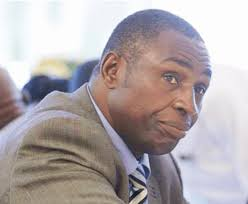
HARARE – Two members of the Apostolic Faith Mission (AFM) in Zimbabwe have approached the High Court seeking to nullify the election of church president Dr Cossam Chiangwa and three other senior leaders, arguing that the vote violated the church's constitutional age limits.
The application, filed at the High Court in Harare under case number HCH2288/26, challenges the election held on May 3, 2025, which elevated Dr Chiangwa to the church's highest office alongside deputy president Reverend Amon Chinyemba, secretary-general Dr Nathan Nhira, and national administrator Shepherd Sebata. Church members Daniel Mhlanga and Dennis Maposa are asking the court to declare the election invalid and order fresh elections for the affected positions within 90 days.

According to court papers, the applicants argue that the AFM constitution expressly limits eligibility for presidium positions to candidates aged between 50 and 65 years at the time of election. The application relies on Clause 14.2.1 of the church regulations, which states that candidates must be "not more than 65 years at the point of election." The applicants further argue that the same age restriction applies to the offices of deputy president and secretary-general through constitutional provisions governing provincial overseers, from whom candidates for those positions are drawn.
In his founding affidavit, Mhlanga alleges that attempts were made in early 2025 to increase the maximum qualifying age from 65 to 70 years. He contends that the constitutional amendment process required to effect such a change was not properly followed.
"None of the procedures prescribed by Clause 13.6 were activated or complied with on February 8, 2025. The resultant resolutions are a nullity which must be set aside," Mhlanga states in court papers.
The dispute centres on meetings of the church's Apostolic Council held in February 2025 at the Mufaro Conference Centre in Mushagashe, Masvingo. According to the applicants, Dr Chiangwa tabled proposals to amend the constitution to permit candidates up to the age of 70, reportedly drawing inspiration from Statutory Instrument 197 of 2024, which increased Zimbabwe's civil service retirement age to 70. The applicants argue that the proposed amendment never satisfied the constitutional requirements necessary to alter the church's governing document.
They further reject suggestions that the Apostolic Council merely interpreted existing provisions rather than amending them.
"There is no interpretation that reads the number 65 as 70. The meaning of 'sixty-five' was not in issue," Mhlanga argues.
Maposa, who supports the application, maintains that the alleged change fundamentally altered the electoral process.
"The election conducted on May 3, 2025, proceeded on the basis of the altered qualifying criteria. Persons who would otherwise have been ineligible were permitted to participate," he states in supporting papers.
Dr Chiangwa acknowledged the existence of the court challenge but declined to comment on its merits, citing the pending legal proceedings.
"I acknowledge the matters you have raised in your questions. I advise, however, that this matter is currently before the courts, and it is sub judice," he said in response to media inquiries. "Until the matter is finalised, we won't be making any public statements."
The case is expected to attract significant attention within one of Zimbabwe's largest Pentecostal denominations, particularly given the church's history of internal disputes and leadership contests. Legal observers say the court's eventual ruling could provide important guidance on how religious organisations interpret and amend their constitutions, especially where eligibility criteria for leadership positions are concerned.
The High Court is yet to set down the matter for determination. Questions have also been raised about why the applicants waited approximately a year after the election before launching the legal challenge, although this issue is likely to form part of the proceedings as the matter progresses through the courts.
AFM Zimbabwe age limit dispute


Comments