

Ethiopia Volcano Ash Disrupts India–UAE Air Travel
- Southerton Business Times

- Nov 27, 2025
- 2 min read

MUMBAI/DUBAI — Air travel between India and the United Arab Emirates has been thrown into disarray after a massive ash plume from Ethiopia’s Hayli Gubbi volcano forced widespread cancellations, diversions and heightened safety checks across major airports. Aviation regulators in both countries have issued urgent advisories as airlines work to safeguard passengers and aircraft.
The Hayli Gubbi volcano in Ethiopia’s Afar region erupted for the first time in recorded history, sending ash more than 10 kilometres into the atmosphere. Strong winds pushed the plume across the Red Sea and deep into South Asia, contaminating airspace over Gujarat, Rajasthan, Delhi, Punjab and Maharashtra. Meteorologists report ash movement at 100–120 km/h, warning that disruptions across northern India and Gulf airspace may continue. Sulfur dioxide emissions have also been tracked, prompting environmental concerns. An aviation analyst in Dubai said the event is “rare, far-reaching, and demands absolute prioritisation of safety.”
Several airlines, including IndiGo, Akasa Air and KLM, confirmed cancellations and rerouted flights on Gulf-bound routes. An IndiGo flight from Kannur to Abu Dhabi was diverted to Ahmedabad, while departures from Mumbai and Delhi faced delays or redirections. Mumbai Airport issued an advisory urging passengers to stay in contact with their airlines and plan for extended processing times. India’s Directorate General of Civil Aviation ordered runway inspections for ash contamination and instructed carriers to avoid affected flight corridors.
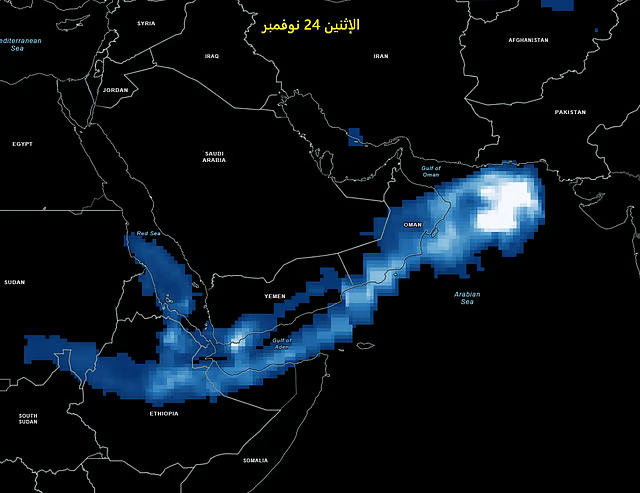
Airport authorities warn that volcanic ash poses significant risks to aircraft by damaging jet engines, reducing visibility and contaminating runways. Experts note that even minor ash exposure can result in costly maintenance and extended grounding times. International agencies, including the International Civil Aviation Organization, have issued alerts to carriers operating in the region. Gulf airports are coordinating with Indian authorities to manage diverted traffic and reduce congestion.
The disruption comes during a peak travel period, affecting both business and leisure passengers between India and the UAE. Aviation analysts warn that prolonged ash presence could affect trade routes, tourism flows and airline revenues. Environmental experts have raised additional concerns about public health impacts stemming from sulfur dioxide emissions, advising residents in affected Indian states to limit outdoor exposure. A climate researcher in Addis Ababa said the event represents “a combined aviation, economic and environmental challenge for the region.”
Authorities in India, Ethiopia and the Gulf continue to track wind patterns and ash dispersion to assess when normal operations can resume. Until then, passengers are urged to monitor official updates. The eruption has reinforced global aviation’s vulnerability to natural events and the growing need for comprehensive contingency planning.


Comments