

THE BATTLE FOR BAMAKO: Inside the High-Stakes Geopolitical War for the Sahel


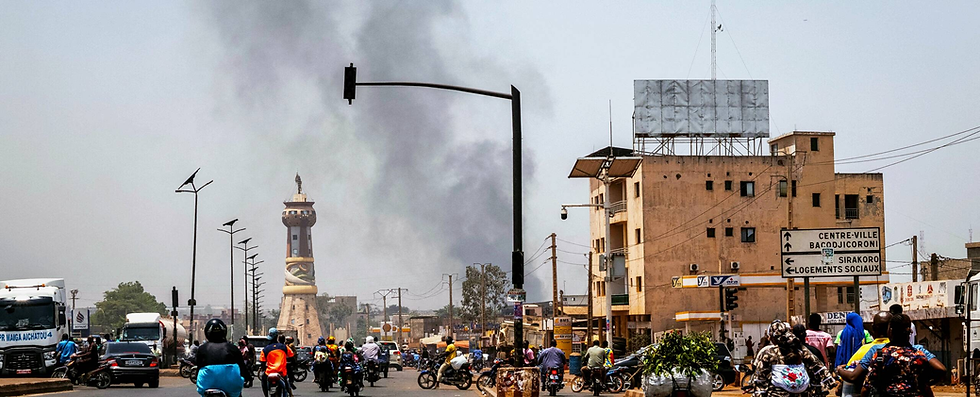
BAMAKO — In the pre-dawn darkness of April 25, 2026, the Sahel region witnessed one of the most sophisticated military offensives in modern African history. Simultaneously striking five major cities, Bamako, Gao, Kidal, Kita, and Sévaré, an estimated 10,000 to 12,000 fighters launched a coordinated push that aimed to topple the Malian government. But as the smoke clears, the narrative of the attack reveals a complex web of geopolitical shifting, a "Syrian-style" insurgency strategy, and the arrival of high-grade NATO weaponry in the hands of desert rebels.
For years, the JNIM (Al-Qaeda's Sahel branch) and the Azawad Liberation Front (ALF) were bitter rivals. One sought a religious caliphate; the other, a secular Tuareg homeland. However, in early 2026, the two groups finalized a "marriage of convenience."
Under the terms of their pact, the ALF controls captured urban centers, while JNIM governs rural zones under Sharia law. Their common enemy: the Malian Army and their Russian partners, the Africa Corps.
"The enemy of my enemy is my brother—until the battle is over," notes a report from the International Crisis Group. This alliance turned a series of skirmishes into a full-scale regional war.
The most alarming discovery of the April 25 offensive was the presence of Mistral and Stinger MANPADS, NATO-grade, shoulder-fired anti-aircraft systems. How did al-Qaeda affiliates obtain French and American missiles? Investigators point to three likely pipelines:
The Libya Legacy: Stockpiles looted during the 2011 fall of Gaddafi continue to filter south.
The Ukraine Leak: Independent analysts have flagged an "accountability gap" in weapons shipped to Eastern Europe, suggesting some have reached the African black market.
Battlefield Capture: JNIM has become proficient at raiding state armories, turning government-purchased weapons against the state in a single afternoon.
For many Malians, the partnership with Russia was cemented not by rhetoric but by a fuel convoy in 2025. When jihadists blockaded Bamako, cutting off supplies from Senegal and the Ivory Coast, the Africa Corps escorted fuel tankers under helicopter cover, ending a crippling energy crisis.
On April 25, this partnership faced its ultimate test. While the attackers struck the airport and the fortified Kati military base, the Malian Presidential Guard and Russian air support held the line. However, the victory came at a heavy price: the assassination of Defense Minister Sadio Camara on April 26. His death, alongside that of family members, serves as a grim reminder that the insurgency has penetrated the "walls of the state."

Mali, alongside Burkina Faso and Niger, forms the Alliance of Sahel States (AES). Their pivot toward Moscow and rejection of Western military presence (specifically France and the UN’s MINUSMA) has turned the region into a laboratory for a new global order.
As Africa Today analyst Azubike puts it: "Until the lion learns to write, every hunting story will glorify the hunter." Both the Malian government and Western intelligence agencies are fighting to control the narrative of April 25. For the citizens of Bamako, who stood in the streets to support their soldiers in the middle of the night, the battle isn't about global optics, it's about the fundamental right to exist without a blockade.
Mali coup attempt April 2026


Comments