

War Veterans Give Parliament 72-Hour Ultimatum to Halt Constitutional Amendment Bill No. 3


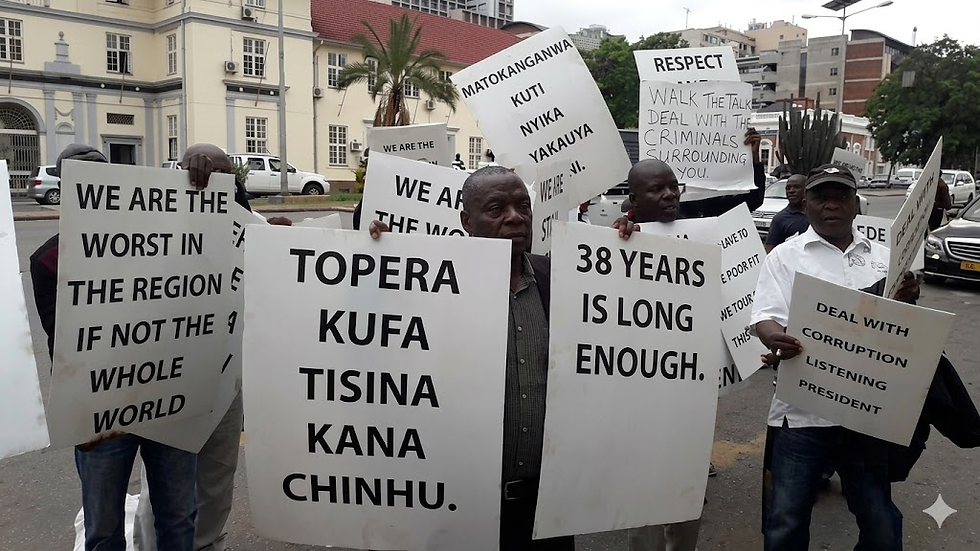
Six Zimbabwean liberation war veterans have issued Parliament with a 72-hour ultimatum to halt the Constitution of Zimbabwe Amendment (No. 3) Bill (CAB3), accusing legislative leaders of presiding over what they describe as an unconstitutional and procedurally flawed amendment process.
The veterans' warning comes just days after the Senate overwhelmingly approved the Bill, with 75 of the 80 senators voting in favour, following its earlier passage in the National Assembly, where it secured the required two-thirds majority with 216 votes against 42.
In an open letter dated 25 June 2026 and addressed to Speaker of the National Assembly Jacob Mudenda and Senate President Mabel Chinomona, the group demanded the immediate suspension of all proceedings related to the Bill. The letter was signed by Reuben Zulu, Godfrey Gurira, Shoorai Nyamangodo, Joseph Chinyangare, Dogmore Knowledge Ndiya, and Joseph Chinguwa, who described themselves as "Concerned Citizens of the Republic of Zimbabwe" and defenders of the Constitution. They argue that CAB3 is "fundamentally flawed, substantively unconstitutional and procedurally fraudulent," warning that its passage would undermine Zimbabwe's constitutional order.
Central to their objection is Section 328 of the Constitution, which regulates amendments affecting presidential term limits. According to the veterans, Section 328(7) expressly prevents an incumbent President from benefiting from changes to presidential term limits without the approval of voters through a national referendum.
However, they argue that Clause 3(2a) of CAB3 seeks to override this constitutional safeguard by introducing a "notwithstanding Section 328(7)" provision.
"This is not merely a procedural oversight; it is a substantive amendment in non-express terms, a direct violation of Section 328(2), and a calculated assault on the Constitution itself," the letter states.
The group insists that Parliament cannot bypass entrenched constitutional protections through ordinary legislative procedures.
The war veterans also allege that the legislative process was tainted by corruption and inducements offered to Members of Parliament. They cite widespread public allegations that MPs received cash payments and luxury vehicles in exchange for supporting the Bill. The letter specifically references reports linking benefits allegedly provided by businessman Wicknell Chivayo to MPs Samantha Mureyani (CCC), Remigious Matangira (ZANU-PF), and Susan Matsunga (CCC).
The veterans further allege that legislators received US$10,000 each, with the funds allegedly distributed through party Chief Whips and financed by businessman Scott Sakupwanya. They argue that if proven, such conduct would violate Section 18 of the Privileges, Immunities and Powers of Parliament Act, which prohibits MPs from accepting rewards or compensation for promoting legislation. The letter also cites Section 170 of the Criminal Law (Codification and Reform) Act, which criminalises bribery involving public officials.
"A vote bought by cash and keys is not a constitutional vote; it is an exhibit in a criminal inquiry," the veterans wrote.
The group has called on Parliament to:
Immediately suspend all proceedings on CAB3;
Declare the National Assembly vote invalid;
Prevent any further consideration of the Bill;
Institute a parliamentary privileges investigation into alleged inducements;
Require MPs to disclose any benefits received in relation to the Bill; and
Refer the bribery allegations to the Zimbabwe Anti-Corruption Commission (ZACC) and the Prosecutor-General for criminal investigation.
The ultimatum comes as President Emmerson Mnangagwa has summoned the National Assembly for an extraordinary sitting on Tuesday to consider amendments made by the Senate.
If the lower House adopts the Senate's version without further amendments, CAB3 will proceed to the President for assent before becoming law. The proposed constitutional amendments have generated intense political and legal debate, with critics arguing that some provisions should only take effect following approval in a national referendum, while the Government maintains that Parliament has the constitutional authority to enact the changes without one.

Constitution Amendment Bill No. 3


Comments