

ZEC Backs Constitutional Amendment No. 3, Says Changes Will Improve Election Management


By Percy Nhara | Southerton Business Times
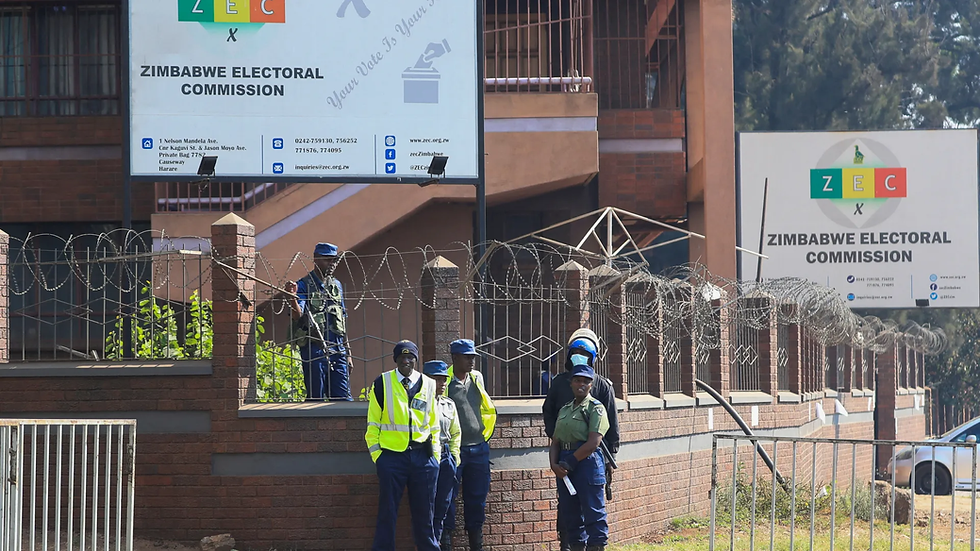
HARARE – The Zimbabwe Electoral Commission (ZEC) says Constitutional Amendment Act No. 3 will strengthen Zimbabwe's electoral management system by streamlining the commission's responsibilities and improving operational efficiency. The constitutional changes transfer responsibility for voter registration and the compilation and maintenance of the voters' roll from ZEC to the Registrar-General's Office, while also creating a new Zimbabwe Electoral Delimitation Commission to oversee constituency boundary delimitation.
Speaking to ZBC News, ZEC Chief Elections Officer Simbarashe Tongayi said the reforms would enable the electoral commission to focus on its core constitutional mandate.
"The Constitutional Amendment Act Number 3 is a good law because it streamlines the core functions of the electoral management body to focus on two key issues: conducting free and fair elections and voter education. This improves operational efficiency and streamlines functions," Tongayi said.
He added that the Registrar-General already holds the civil registration data required to compile the voters' roll.
"The Registrar-General already has the necessary information required for the voters' roll, so this improves efficiency because we were obtaining that information from them in any case."
The transfer of voter registration responsibilities has generated debate among political stakeholders, election observers and constitutional experts. Supporters argue that the Registrar-General's Office, which maintains national records of births, deaths, national identity documents and citizenship, is well placed to maintain an accurate and continuously updated voters' roll. They contend that integrating voter registration with the civil registry could ensure deceased voters are removed more quickly, and eligible citizens are added once they obtain national identity documents.
However, critics argue that the changes could weaken the perceived independence of Zimbabwe's electoral system. Unlike ZEC, which is established as an independent Chapter 12 constitutional commission, the Registrar-General's Office operates under the Ministry of Home Affairs and Cultural Heritage, making it part of the Executive. Opponents therefore argue that transferring responsibility for the voters' roll to a government department could raise concerns about institutional independence and public confidence in electoral processes.
The reforms also come after ZEC faced criticism over the 2023 constituency delimitation exercise. Opposition political parties, civil society organisations and some election analysts accused the commission of gerrymandering, the manipulation of electoral boundaries to favour a particular political party. Among the issues raised were claims that constituency boundaries disproportionately favoured rural areas, with 143 constituencies allocated to communal areas compared to 67 constituencies in urban and peri-urban areas.
Critics also questioned the methodology used to calculate constituency voter variations, alleging that some constituencies had significantly larger voter populations than others, contrary to constitutional requirements. ZEC rejected allegations that it deliberately manipulated electoral boundaries.
Under Constitutional Amendment No. 3, ZEC's primary responsibilities will centre on conducting elections, voter education and overseeing electoral processes, while the newly established Zimbabwe Electoral Delimitation Commission will assume responsibility for constituency boundary reviews. The reforms are expected to reshape Zimbabwe's electoral administration ahead of future elections, although debate over their impact on electoral independence and public confidence is likely to continue.

Constitutional Amendment No. 3 Zimbabwe


Comments