

Zimbabwe Lost US$400M in Undeclared Caesium and Tantalum Exports, NUST Expert Reveals

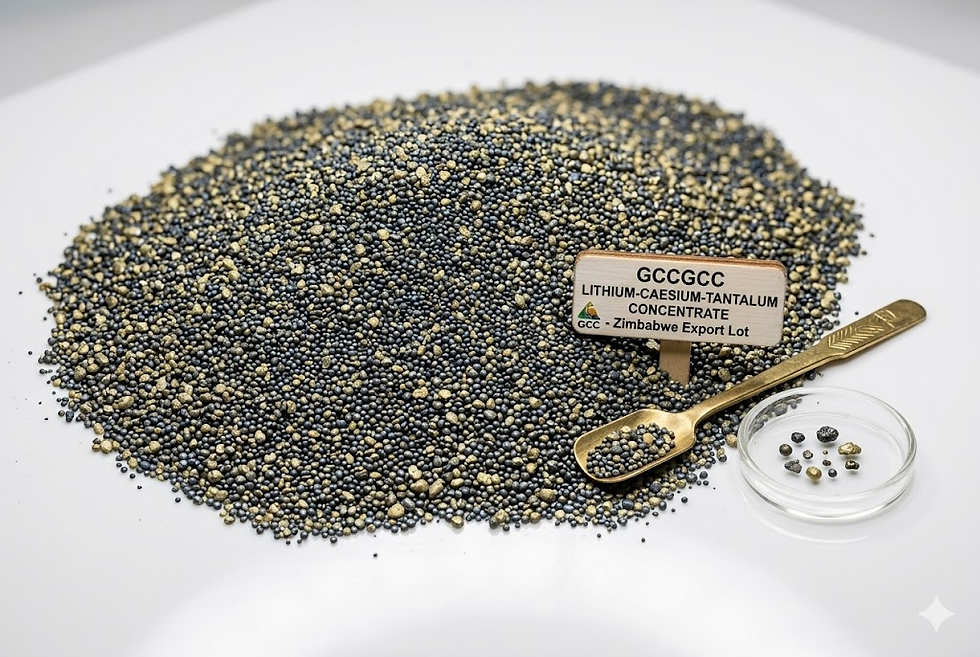
BULAWAYO — Zimbabwe may have lost over US$400 million in potential revenue due to the export of undeclared caesium and tantalum prior to the recent government crackdown on raw mineral shipments. These high-value minerals were reportedly "piggybacking" on lithium concentrates, leaving the country unaccounted for and untaxed. The revelations were made by Engineer Mudono, a senior lecturer at the National University of Science and Technology (NUST), during a high-level breakfast meeting hosted by the Zimbabwe Environmental Law Association (ZELA) last week.
According to Eng Mudono’s research, the sheer volume of by-products found within exported lithium is staggering. By analyzing the 1.52 million metric tonnes of concentrate previously exported, he estimated that the country lost millions in "invisible" minerals.
“If I use that as the basis of calculation, for caesium, we have around 8,512 metric tonnes within the concentrate. That is approximately US$30 million,” Eng Mudono explained. “Then you look at tantalum. At 0.036 to 0.09 per cent content, we are talking about roughly US$400 million that was within the exported material.”
Caesium is highly valued in the drilling and electronics industries, while tantalum is a critical component in the manufacturing of capacitors for smartphones and automotive electronics.
The NUST expert’s findings provide significant weight to the government’s decision to ban raw lithium exports, a policy that came into full effect on February 25, 2026. The move was designed to stop the "leakage" of rare earth elements and force mining giants to invest in local processing. Eng Mudono urged the Ministry of Mines and Mining Development to transition from simple concentration to full mineral beneficiation.
"We must move beyond simply producing mineral concentrates," he argued. "The focus must be on refining and manufacturing finished products locally to ensure that every gram of tantalum and caesium is accounted for and taxed accordingly."
Civil society groups at the meeting echoed these sentiments, noting that without a robust value-addition strategy, Zimbabwe remains vulnerable to "resource raiding."
"This research highlights the urgent need for sophisticated lab testing at our borders," said a ZELA representative. "We cannot rely on the declarations of mining companies alone when hundreds of millions of dollars are literally hiding in plain sight within the ore."
Zimbabwe mineral revenue loss


Comments