

Zimbabwe sets up task force to tackle illegal mining

By Southerton Business Times | Harare, Zimbabwe | August 10, 2026
THE Zimbabwean Government has approved a nationwide task force to tackle illegal and unregulated mining, following concerns over environmental destruction, damage to public infrastructure and growing social problems in mining communities.
The decision was announced after a Government assessment of Bindura Municipality and Bindura Rural District Council uncovered extensive illegal and unregulated mining in residential areas, public infrastructure corridors and land reserved for future urban expansion.
Information, Publicity and Broadcasting Services Minister Zhemu Soda said Cabinet had approved a “Whole-of-Government” approach to address the problem, with various Government agencies expected to work together on enforcement and regulation.
Local Government and Public Works Minister Daniel Garwe previously presented findings from the Bindura assessment, highlighting the impact of mining activities on roads, railway infrastructure, land reserved for public facilities and the environment. The findings have placed illegal mining in Bindura at the centre of renewed national concern over the consequences of unregulated mineral extraction.
Bindura mining damages infrastructure
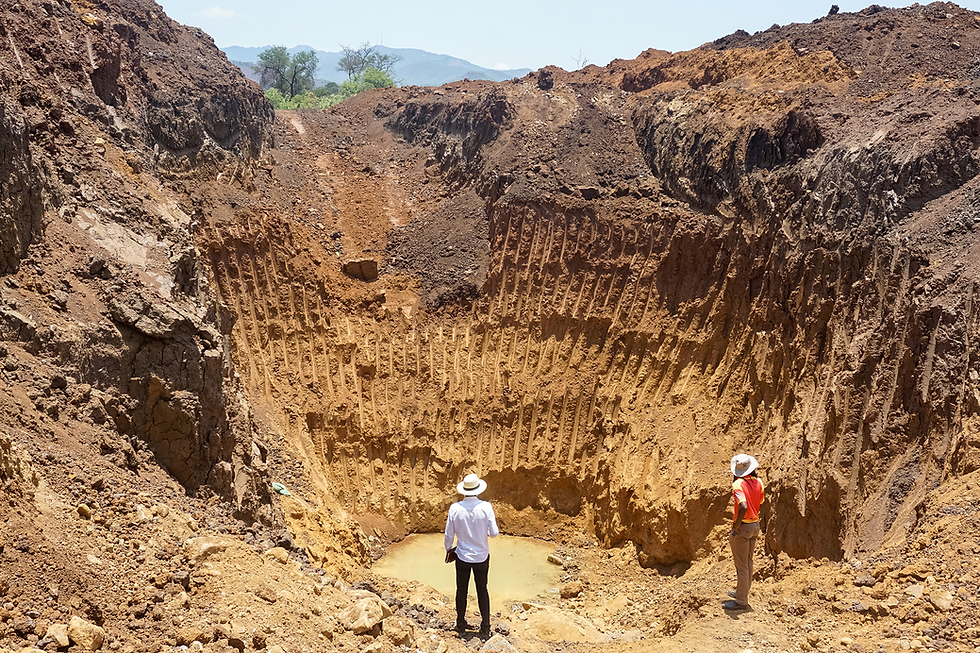
According to the Government assessment, mining activities have spread into areas designated for hospitals, schools, residential development and other public infrastructure. The activities have also affected roads and railway corridors, while mining operations have contributed to environmental degradation in the area. The Mazowe River, an important waterway supporting communities and agricultural activities in the region, has also come under pressure from mining-related pollution.
Garwe said the expansion of illegal mining in Bindura had affected infrastructure, the environment and communities. The reported social consequences include increased exposure to diseases and substance abuse, with Government citing conditions such as silicosis, sexually transmitted infections and tuberculosis.
Seventeen rivers affected by mining
The crackdown comes as Zimbabwe grapples with widespread mining-related degradation of its waterways. In June, the Government declared a State of Disaster for the emergency rehabilitation of riverine ecosystems covering 17 rivers affected by legal and illegal alluvial mining. The affected waterways include the Mazowe, Murowodzi, Save, Angwa, Sanyati, Munyati, Mupfure, Umzingwane, Insiza, Manzimudaka, Mutebekwi, Mtshingwe, Mutare, Haroni and Nyamukwarara rivers.
President Emmerson Mnangagwa subsequently established a high-level technical working party to coordinate the rehabilitation programme, including the appointment of contractors and monitoring of restoration work. The Centre for Natural Resource Governance (CNRG) has welcomed the Government's focus on restoring degraded rivers but warned that rehabilitation programmes must be transparent and protected from exploitation by mining interests. CNRG said poorly regulated mining has contributed to siltation, altered water flows, biodiversity loss and pollution across affected river systems.
Government seeks tighter mining controls
The new task force is expected to bring together Government institutions responsible for mining, environmental protection, local government, public health and law enforcement. Minister Soda said the coordinated approach would ensure that regulations governing mining permits, environmental protection and public health standards are implemented and strengthened. The move comes as Zimbabwe seeks to expand mineral production and increase the value derived from its natural resources while addressing the environmental and social costs associated with extraction.
The mining sector remains central to the country's economic ambitions, including efforts to increase local beneficiation and attract investment into mineral processing. However, the expansion of mining has also created tensions around environmental protection, community land and the participation of small-scale miners.
Small-scale miners face uncertainty
Zimbabwe's mining economy includes thousands of small-scale and artisanal miners whose livelihoods depend on mineral extraction. The government's challenge is therefore not only to remove illegal operators but also to distinguish between criminal and unregulated activities and legitimate small-scale mining that can be brought into the formal economy. The latest crackdown comes against a backdrop of growing concern over the environmental cost of mineral extraction.
Recent water testing highlighted by CNRG and the Zimbabwe Environmental Law Association found heavy metals, mineral nutrients and microbial contamination in some rivers affected by mining in Penhalonga and Shurugwi. CNRG said some samples failed to meet recommended standards for domestic and drinking water. The new national task force will therefore face a difficult balancing act: enforcing mining laws, protecting communities and ecosystems, while ensuring that Zimbabwe's mineral wealth contributes to sustainable economic development. For communities affected by illegal mining, the effectiveness of the new approach will ultimately depend on whether enforcement is sustained and whether degraded land and water systems are successfully restored.

illegal mining in Zimbabwe


Comments